
Plate Rolling Machines for Sale Australia
Plate rolling machines, also known as a plate roller or plate bending machines, are essential for fabrication workshops requiring precision bending of steel plate into cylinders, cones and curved sections. At Power Machinery, we supply industrial plate rolling machines including 3 roll and 4 roll plate rollers for light fabrication through to heavy-duty production across Sydney, Melbourne, Adelaide, Perth and Brisbane, and regional Australia .
Plate bending rolls are essential for creating both simple and complex curves, making them indispensable in modern metal fabrication processes.
Whether you are searching for a plate roller for general fabrication or a high-capacity plate rolling machine for production, choosing the right equipment is critical.
Trusted Australian Supplier
Supplying industrial metal machinery across Australia to fabrication, manufacturing and engineering workshops.
Industrial Grade Global Brands
Premium metal machinery from leading European and North American manufacturers including Swebend and Lemas.
Installation and Technical Support
In-house service department with full installation, commissioning and operator training available Australia-wide.
Finance & Flexible Purchasing
Finance options available to help workshops invest in the right metal cutting equipment for your needs.
Nationwide Delivery
Metal machines delivered and supported across Sydney, Melbourne, Brisbane, Perth, Adelaide and regional Australia.
What is a plate roller machine?
A plate rolling machine is an industrial machine used to bend flat metal plate into cylindrical, conical or curved shapes using rotating rolls.
Also known as a plate roller or plate bending roll, this equipment uses rotating rolls to progressively apply pressure across the width of the plate, forming it into precise curved sections.
Plate bending rollers are widely used in fabrication workshops to manufacture pressure vessels, storage tanks, silos, pipe sections and heavy structural components. Depending on the configuration, they are available in 3 roll and 4 roll designs, with manual, hydraulic or CNC-controlled systems to suit different production requirements.
Modern industrial plate rollers are selected based on plate thickness, rolling width, material yield strength and required rolling diameter. Choosing the correct machine ensures accurate forming, reduced flat ends and consistent production efficiency in industrial applications.
View our section rollers range if you require a machine used to bend metal sections and profiles—rather than flat plate—into curves, rings or arcs.
3 Roll Plate Rollers
Plate Roller for General Fabrication
3 roll plate bending machines are a widely used and cost-effective solution for bending steel plate into cylindrical or conical shapes. Also known as three roll plate rollers or initial pinch plate rollers, these machines use two lower rolls and one adjustable top roll to progressively form flat plate into curved sections.
3 roll plate rollers are well suited to general fabrication workshops producing tanks, pipe sections, cones and structural components. They are available in manual, hydraulic and CNC-controlled configurations, with capacities ranging from light fabrication through to heavy industrial plate thicknesses.
While 3 roll plate rolling machines typically require more operator input than 4 roll systems, they offer flexibility, reliability and strong value for workshops requiring precision plate forming without the complexity of full automation.
Selecting the correct 3 roll plate roller depends on:
Maximum plate thickness
Rolling width
Required rolling diameter
Material yield strength
For many fabrication environments, a 3 roll plate rolling machine provides an efficient and economical solution for steel plate forming.
4 Roll Plate Rollers
High Precision Plate Rolling
4 roll steel plate rolling machines are designed for high precision plate forming and improved production efficiency. Unlike traditional 3 roll systems, a 4 roll plate roller uses two central drive rolls and two adjustable side rolls, allowing the plate to be clamped securely during the rolling process.
This design offers several advantages:
- Superior pre-bending with minimal flat ends
- Greater material control during rolling
- Faster setup and improved repeatability
- Increased accuracy for production environments
Because the plate remains gripped throughout the process, 4 roll plate rolling machines are particularly well suited to workshops producing pressure vessels, storage tanks and heavy fabricated components where accuracy and consistency are critical.
4 roll plate rollers are commonly available with hydraulic drive systems and optional CNC controls, making them ideal for medium to high-volume production applications. They are selected based on plate thickness capacity, rolling width and required minimum rolling diameter.
For fabrication businesses requiring precision and productivity, a 4 roll plate rolling machine provides greater operational control and reduced manual handling compared to traditional configurations.
Not sure which plate roller is right for your application? Speak to an expert.
Comparison Table
| Feature | 3 Roll | 4 Roll |
|---|---|---|
| Pre-bending | Moderate | Superior |
| Flat ends | More | Minimal |
| Automation | Optional | Often CNC |
| Best for | General fabrication | High volume/precision |
Plate Rolling Machine Capacity Guide
Selecting the correct plate bending roller requires careful consideration of plate thickness, rolling width and material type. Capacity ratings vary significantly depending on machine configuration, roll diameter and material yield strength.
Plate Thickness Capacity
Plate roller machines are typically rated by their maximum rolling capacity in mild steel. Light fabrication models may handle steel plate from approximately 2mm to 6mm thickness, while heavy-duty hydraulic plate rollers are capable of forming 20mm, 30mm or even 50mm+ steel plate, depending on the machine design and rolling width.
When evaluating thickness capacity, it is important to consider:
- Material grade (mild steel vs high tensile)
- Required rolling diameter
- Pre-bending requirements
- Production frequency
Higher yield strength materials will reduce effective rolling capacity.
Rolling Width
Rolling width refers to the maximum plate width the machine can accommodate. Industrial plate rolling machines are available in configurations suitable for:
- Standard 1,250mm to 2,000mm workshop widths
- Wide plate applications up to 3,000mm and beyond
The required rolling width should match the largest plate size typically processed in your workshop.
Minimum Rolling Diameter
3 Roll vs 4 Roll Capacity Considerations
Both 3 roll and 4 roll plate rolling machines are rated by thickness and width, but 4 roll systems generally provide improved pre-bending performance and better control in production environments. For workshops requiring higher accuracy or repeat work, a 4 roll plate roller may offer operational advantages.
Choosing the Right Capacity for your Workshop
- Maximum plate thickness required
- Maximum plate width
- Material type and yield strength
- Production volume
- Required rolling accuracy
Plate Rollers for Sale in Australia
If you are looking for a plate roller for sale in Australia, Power Machinery supplies a comprehensive range of industrial plate rolling machines designed for fabrication workshops, engineering companies and heavy industry.
Our range includes 3 roll and 4 roll plate rolling machines from leading European brands, designed for steel plate bending, cylindrical rolling and industrial fabrication applications across Australia. We offer manual, hydraulic and CNC-controlled options available to suit everything from light fabrication through to high-volume industrial production.
Whether you need a compact workshop plate roller or a heavy-duty CNC plate rolling machine, our team can recommend a solution tailored to your:
- Plate thickness requirements
- Rolling width capacity
- Material type and yield strength
- Required rolling diameter
- Production volume and automation level
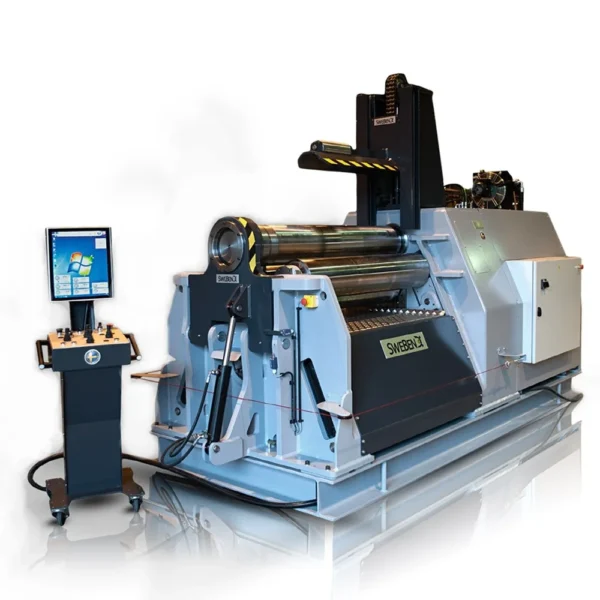


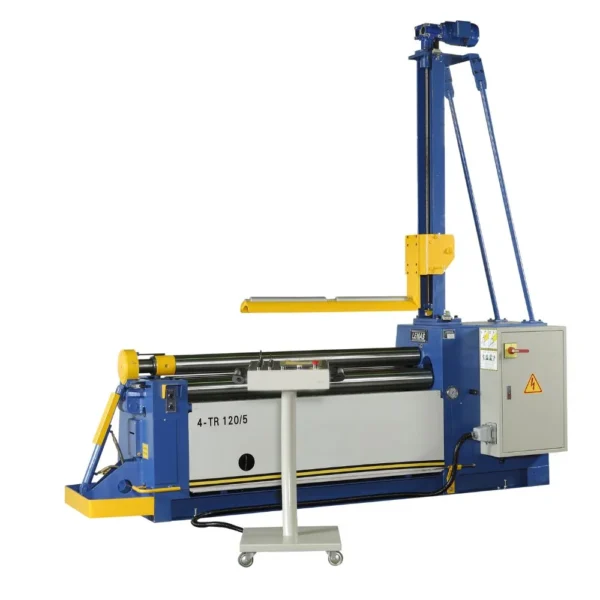
Ideal for general fabrication, delivering reliable and cost-effective plate rolling for cylinders, cones and curved steel sections.
High-precision CNC-capable plate roller with superior pre-bending and minimal flat ends for production environments.
Robust European-built plate roller designed for flexible workshop use across light to medium steel fabrication applications.
Heavy-duty hydraulic plate rolling machine engineered for high accuracy, repeatability and demanding industrial applications.
Industrial Plate Rollers - Applications and Industries
Our range of industrial plate rollers for sale includes machines suitable for:
- General fabrication workshops
- Pressure vessel manufacturing
- Structural steel fabrication
- Mining and heavy industry
- Marine and shipbuilding applications
We supply high-quality European-built machines from leading manufacturers including Swebend and Lemas, known for durability, precision and long-term reliability in demanding environments.
We also have a full range of metal fabrication machinery including metal bandsaws, press brakes, guillotines, hydraulic presses and panbrake folders.
CNC and Hydraulic Plate Rolling Machines
- Programmable rolling sequences
- Automatic pre-bending cycles
- Digital readouts and control systems
- Reduced operator input and setup time
Plate Rolling Machine Price in Australia
The price of a plate rolling machine in Australia varies depending on machine size, capacity and level of automation.
Typical price ranges include:
- Light-duty workshop plate rollers: from ~$20,000 – $60,000
- Mid-range hydraulic plate rollers: $60,000 – $150,000
- Heavy-duty CNC plate rolling machines: $150,000 – $500,000+
Factors influencing price include:
- Maximum plate thickness capacity
- Rolling width
- Number of rolls (3 roll vs 4 roll)
- Hydraulic vs CNC configuration
- Brand and build quality
For an accurate quote, speak to our team to match the machine to your specific application.
Applications of Plate Rolling Machines
Plate rollers are used across a wide range of industrial and fabrication sectors where steel plate must be formed into cylindrical or curved shapes. Their versatility makes them essential equipment in both light fabrication workshops and heavy industrial manufacturing environment.
Pressure Vessel Manufacturing
Plate rolling machines are widely used in the production of pressure vessels and boilers. Precision rolling ensures consistent cylindrical forming of thick steel plate prior to welding and assembly. 4 roll steel plate rollers are particularly suited to this application due to their superior pre-bending accuracy and repeatability.
Storage Tanks and Silos
Fabrication of storage tanks, water tanks, fuel tanks and silos relies heavily on plate rolling machines. Rolling large diameter steel plate sections allows fabricators to produce cylindrical shells efficiently and accurately. Capacity selection is critical to ensure the machine can handle required plate thickness and width.
Mining and Heavy fabrication
Mining and heavy industry often require thick steel plate forming for chutes, hoppers, drums and structural components. Heavy-duty hydraulic plate rollers are commonly specified in these environments to manage higher plate thicknesses and stronger material grades.
Marine and Shipbuilding
Structural Steel and Infrastructure Projects
Large-scale infrastructure projects, including energy and industrial construction, often require rolled steel plate components for structural assemblies. Plate bending roll machines support the production of columns, transition sections and heavy curved plate structures.
Plate rolling machines are often integrated alongside press brakes, guillotines and welding systems within modern fabrication workshops. Selecting the correct machine configuration ensures reliable performance across a broad range of industrial applications.
Why Buy a Plate Roller from Power Machinery?
- Australian-based supplier
- Local installation
- Spare parts support
- Proven European brands
- Technical specification advice
Plate Roller FAQs
Higher tensile materials reduce effective rolling capacity, so thickness ratings should always be evaluated against the specific material grade and required rolling diameter.
The correct rolling width should match the largest plate size typically processed in your fabrication workshop.
The tooling and geometry of plate rollers and section rollers are fundamentally different, so separate machines are required for each application.
The correct rolling width should match the largest plate size typically processed in your fabrication workshop.
Light workshop 3 roll plate rollers may start from tens of thousands of dollars, while large hydraulic or CNC 4 roll plate rolling machines designed for heavy industry can represent a substantial capital investment.
Pricing depends on plate thickness capacity, rolling width, automation level and brand specification. Requesting a tailored quote ensures the correct machine is specified for your production requirements.
The correct rolling width should match the largest plate size typically processed in your fabrication workshop.
Plate rolling machines are widely used across industrial fabrication and manufacturing sectors, including:
- Pressure vessel and boiler manufacturing
- Storage tanks and silos
- Mining and heavy fabrication
- Marine and shipbuilding
- Structural steel and infrastructure projects
- Energy and industrial construction
Any industry requiring steel plate to be formed into cylindrical or curved shapes relies on plate rolling equipment.
- Maximum plate thickness required
- Maximum rolling width
- Material grade and yield strength
- Required rolling diameter
- Production volume
- Level of automation (manual, hydraulic or CNC)
If you are unsure which plate roller best suits your needs, contact us for expert assistance.